Uncategorised
Antonino
Temporary Website
Below, a selection of Antonino's paintings
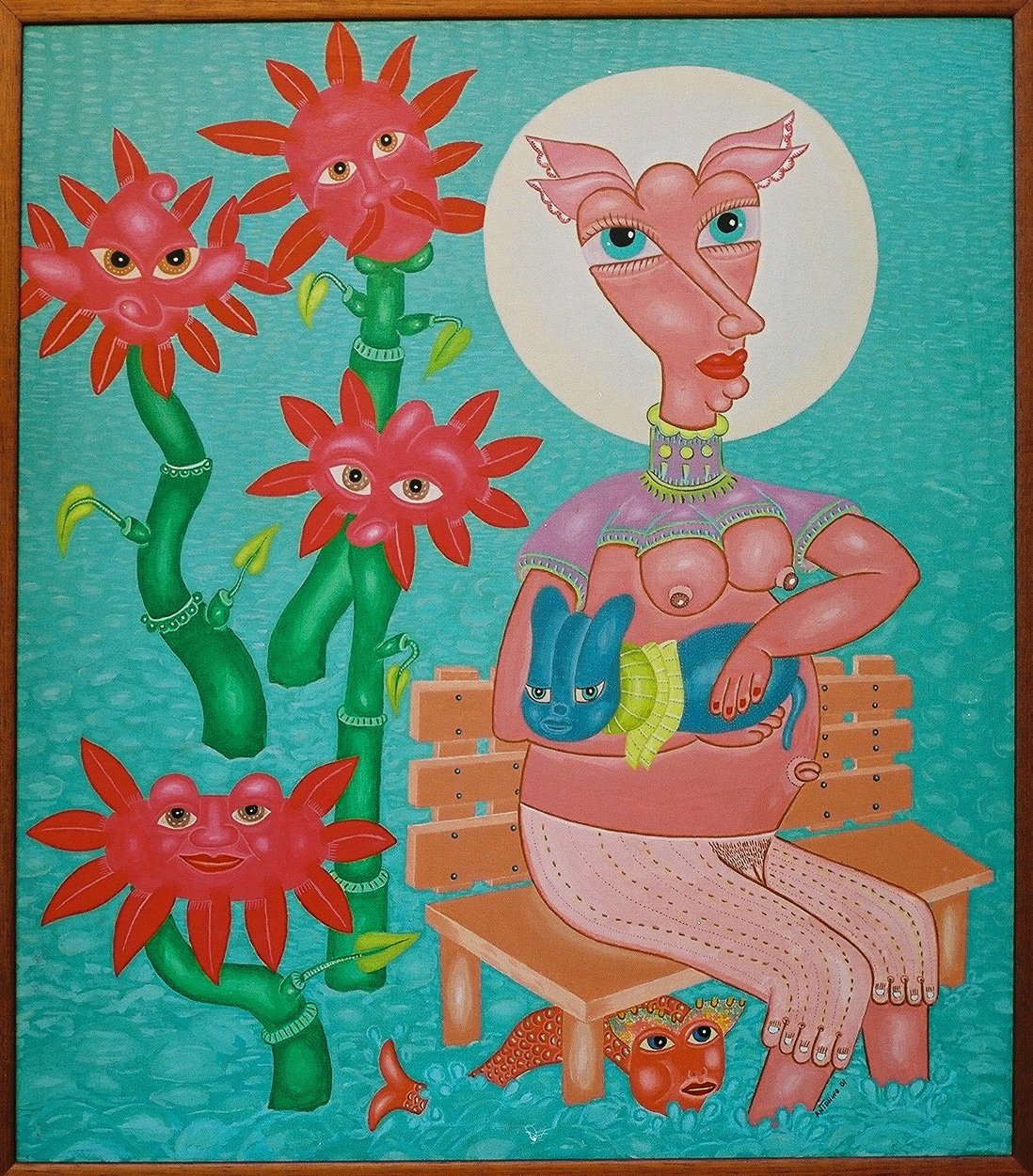
Water Garden
2001, 100 x 90 cm, Acrylic on canvas
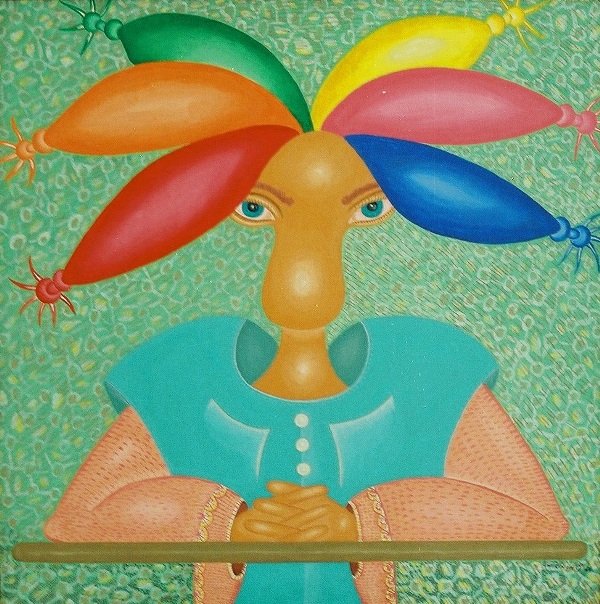
Parish Priest of Modern Times
2001, 80 x 80 cm, Acrylic on canvas
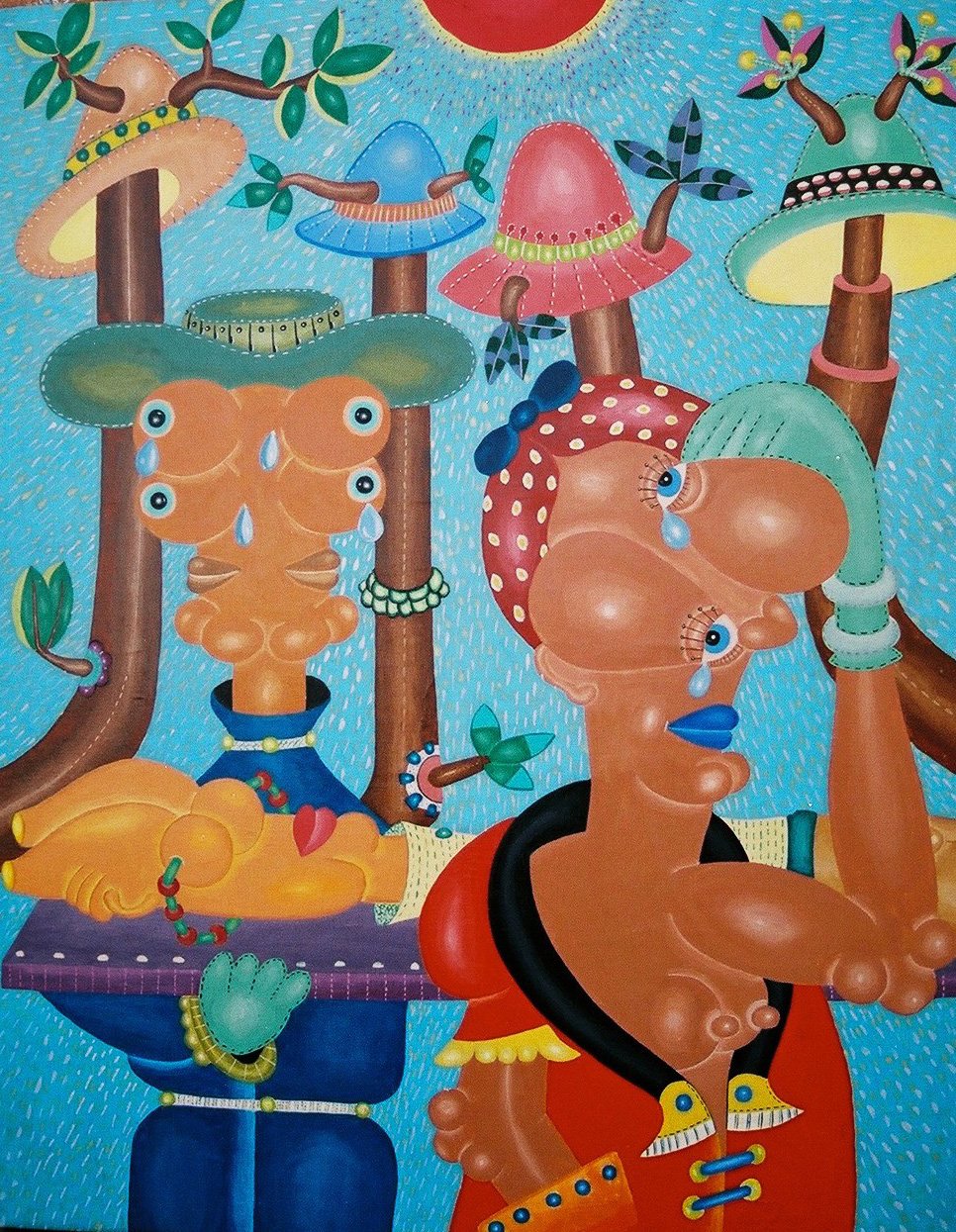
Dustbowlers Weep the Death of a Son
2001, 105 x 80 cm, Acrylic on canvas
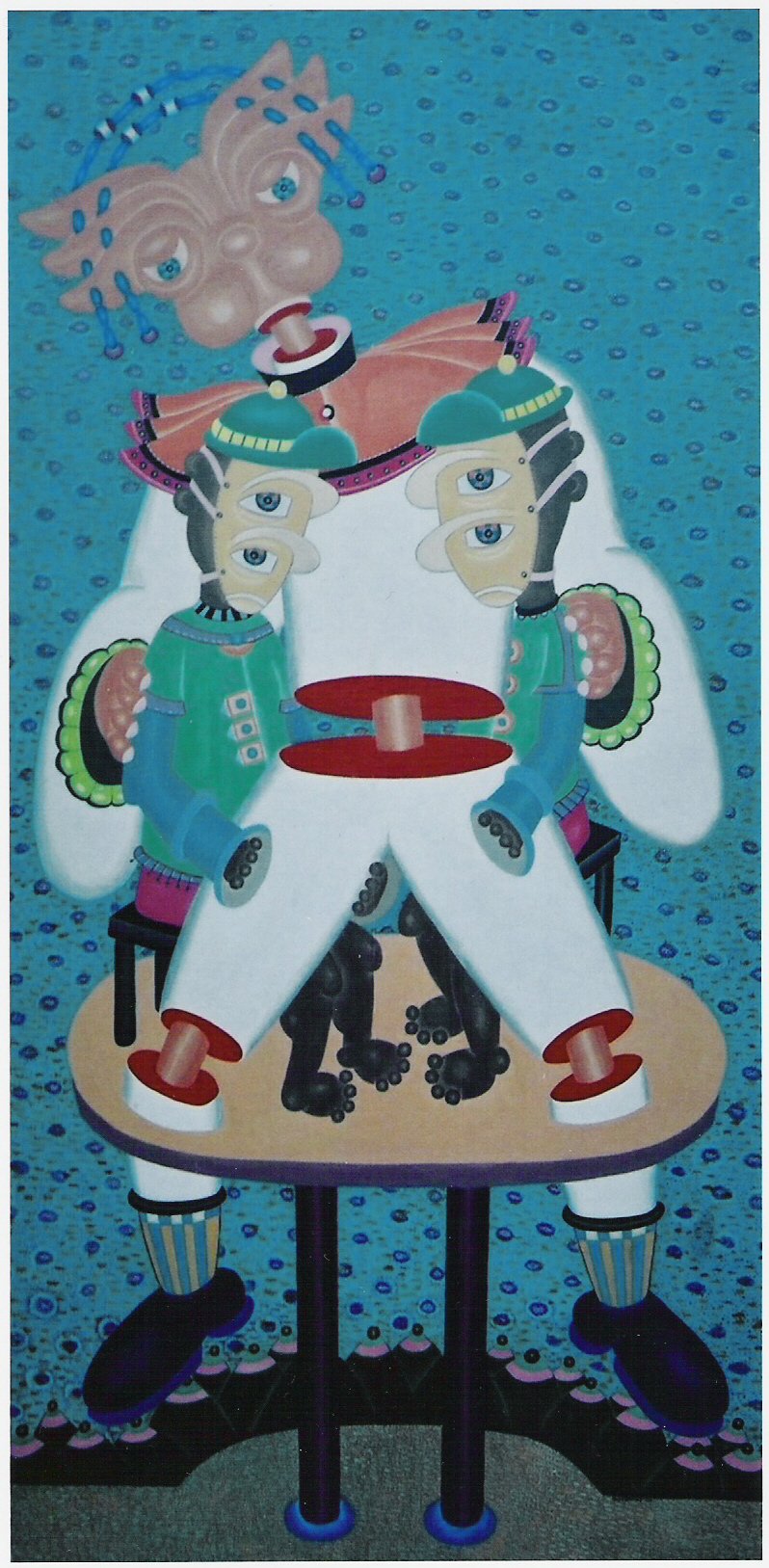
Props of an Institution
2001, 150 x 80 cm, Acrylic on canvas
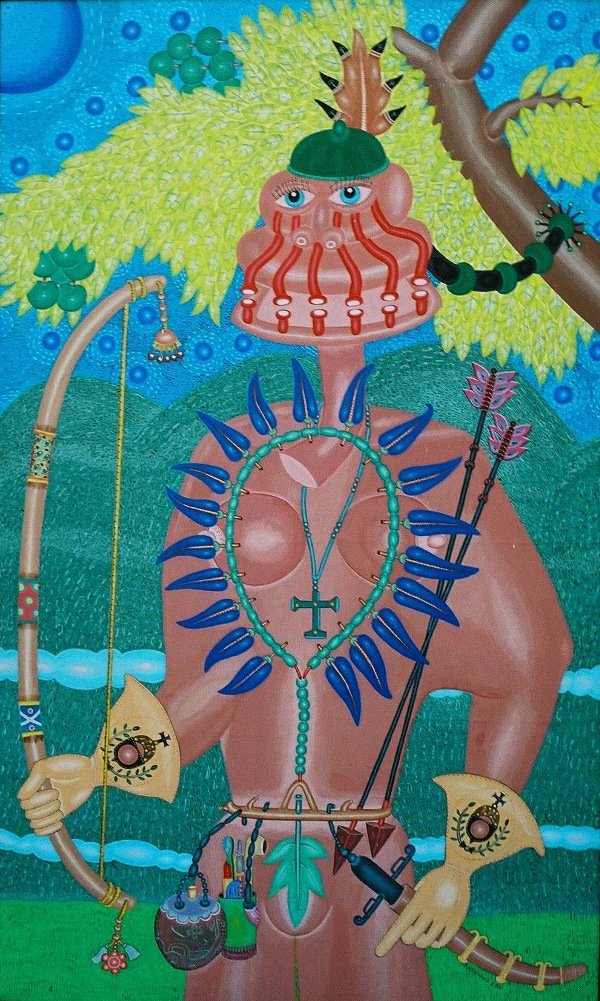
Catarina Paraguaçu
2001, 162 x 100 cm, Acrylic on canvas
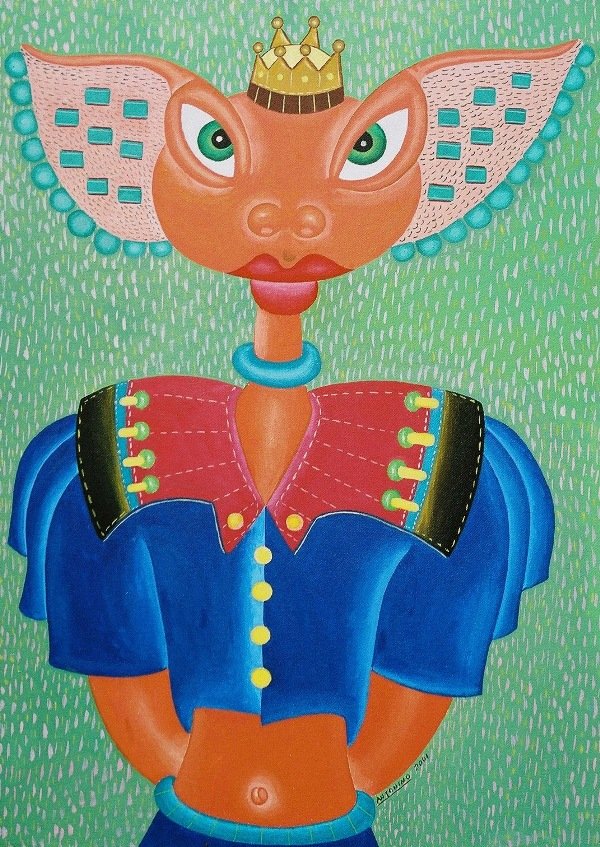
Dona Babe
2001, 70 x 50 cm, Acrylic on canvas
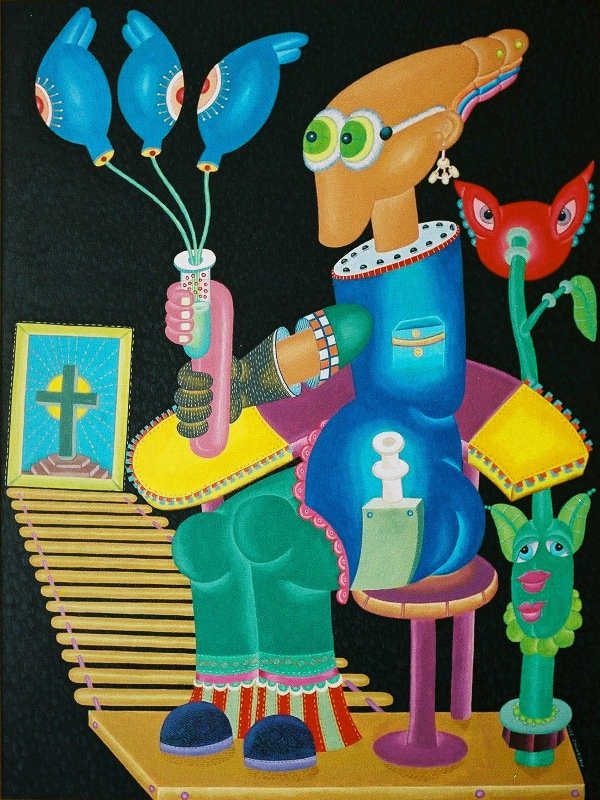
Attempt at Human Cloning
2001, 115 x 85 cm, Acrylic on canvas
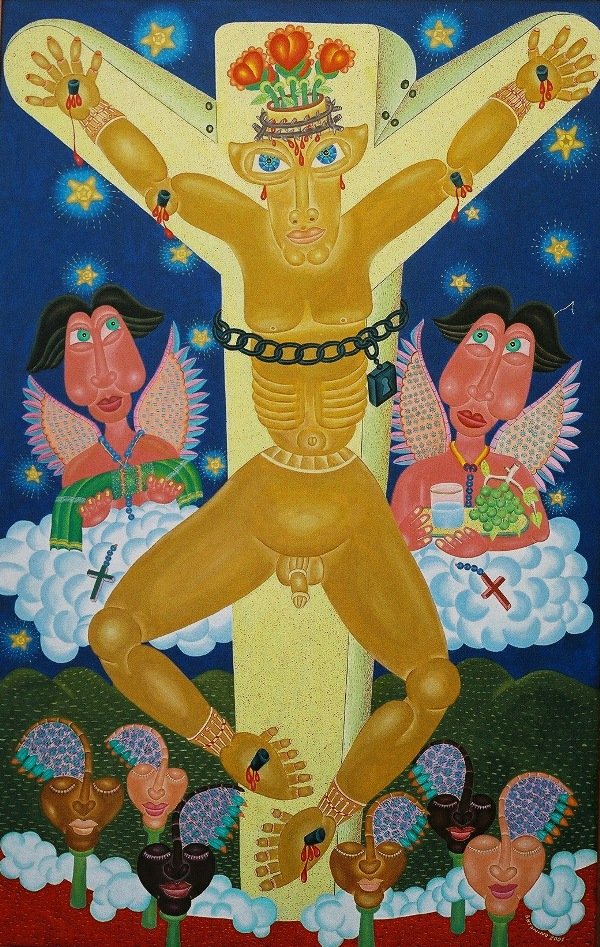
On the Cross
2002, 168 x 108 cm, Acrylic on canvas
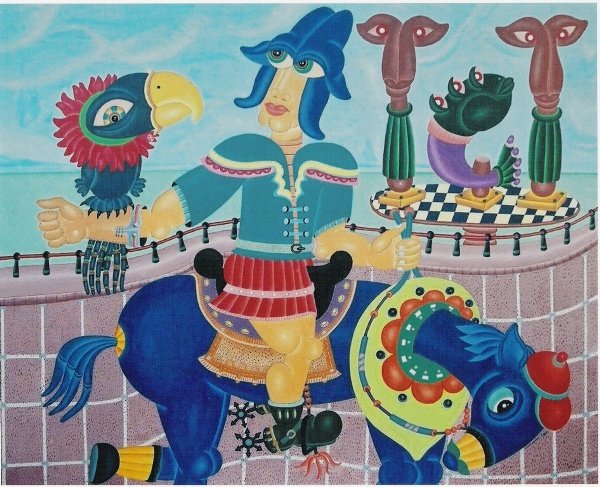
Knight with Falcon
2002, 122 x 152 cm, Acrylic on canvas
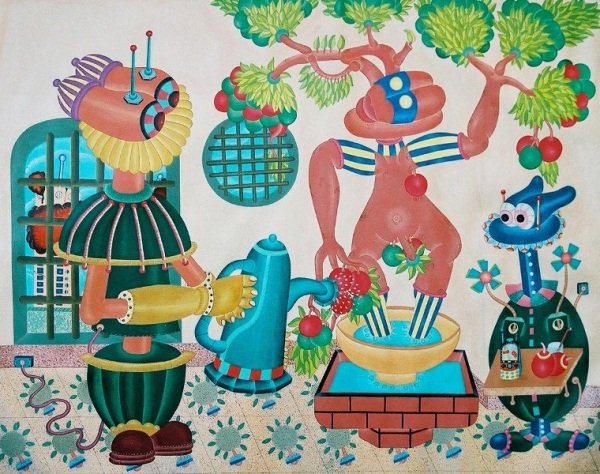
Attack of the Twin Towers
2002, 120 x 155 cm, Acrylic on canvas
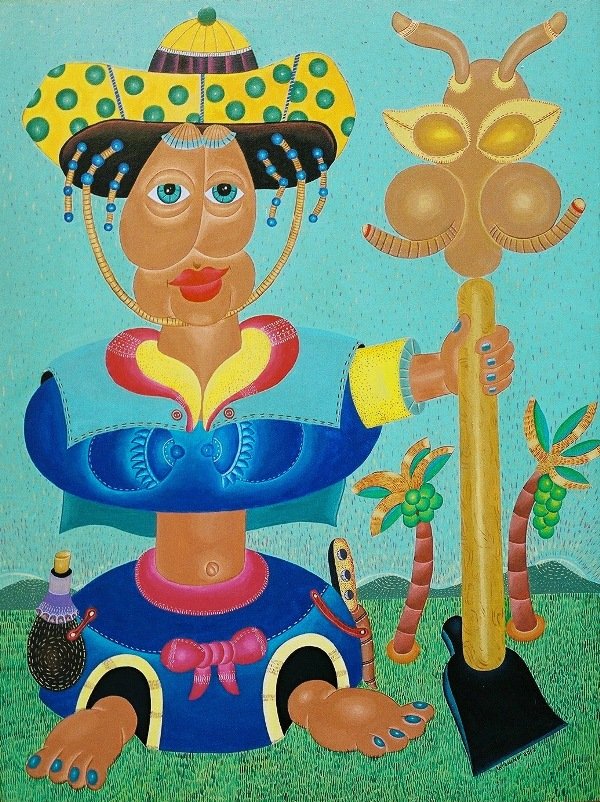
Woman Working in the Wastelands
2002, 95 x 72 cm, Acrylic on canvas
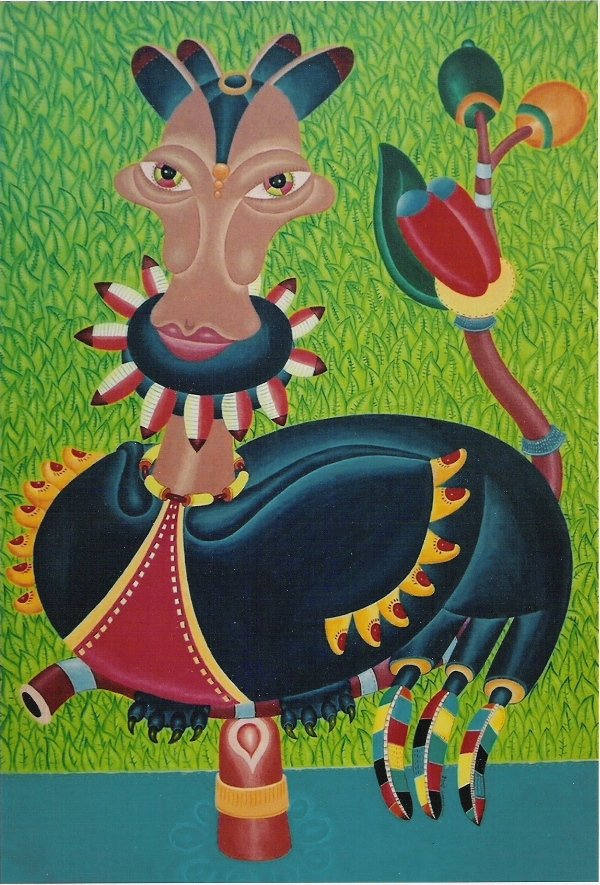
The Last Pink-Breasted Wolf-Bird of the Atlantic Coastal Forest of Bahia
2002, 105 x 72 cm, Acrylic on canvas
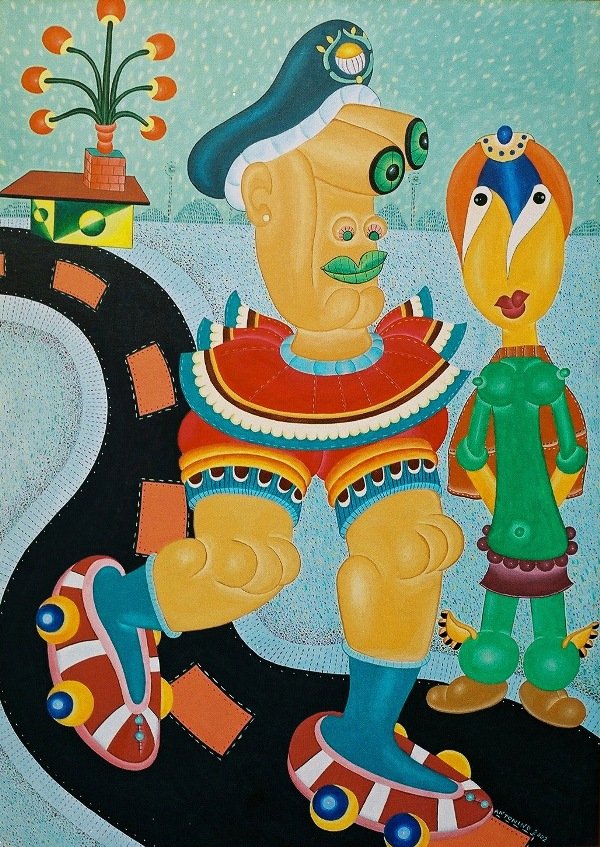
Sailor on Skates
2002, 105 x 80 cm, Acrylic on canvas
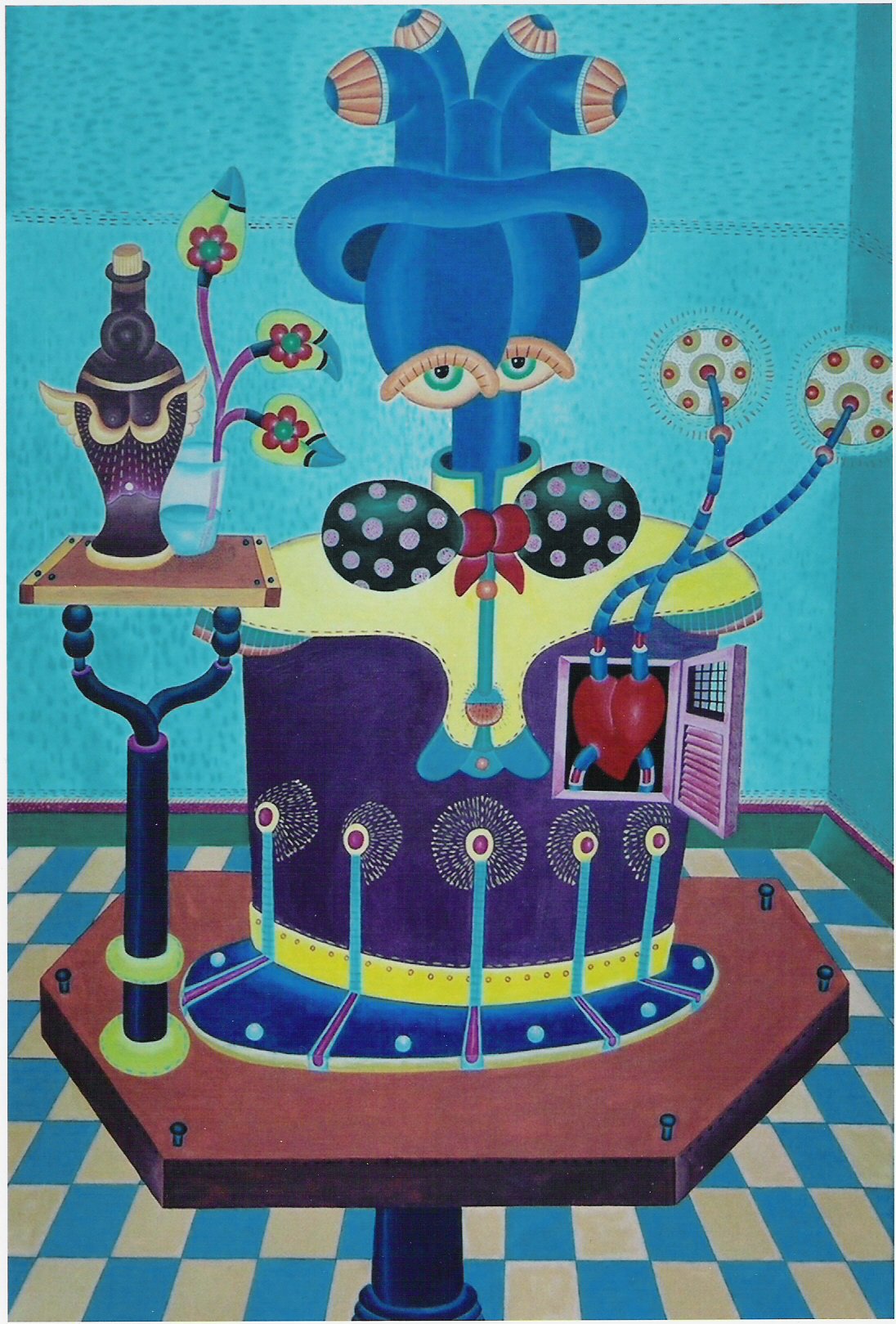
Bohemian in a Bar Table
2002, 105 x 75 cm, Acrylic on canvas
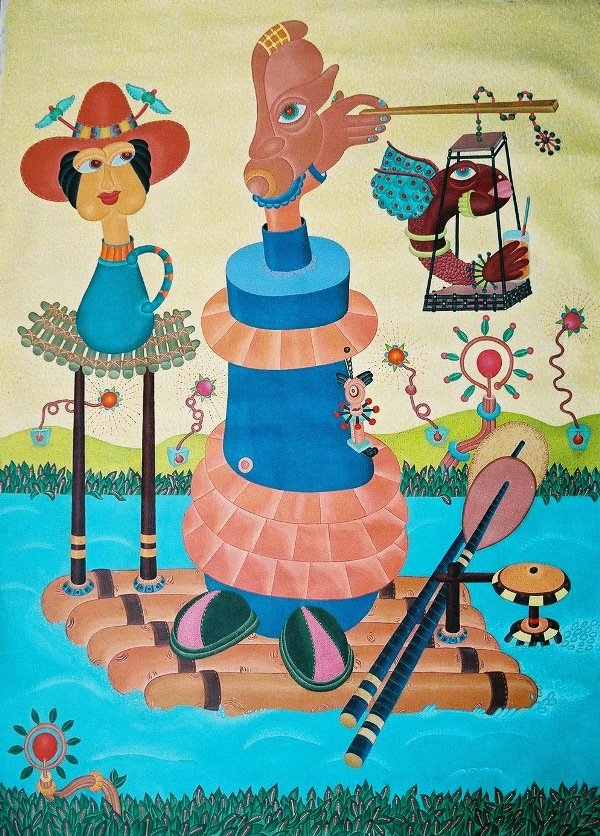
Voyage on the São Francisco River
2003, 205 x 149 cm, Acrylic on canvas
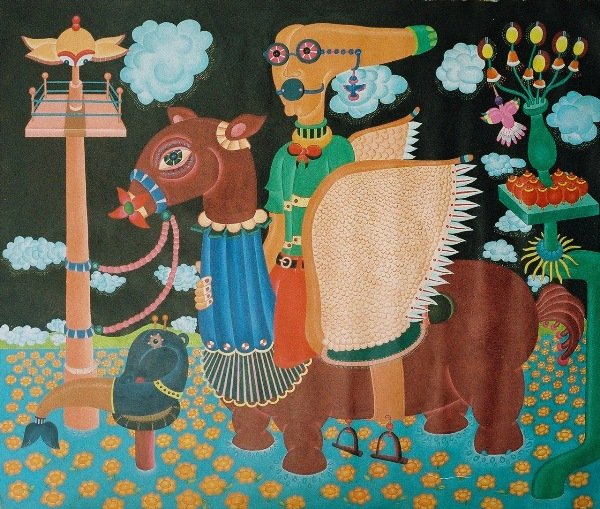
Pegasus, Prisoner in the Garden of Eden
2003, 135 x 162 cm, Acrylic on canvas
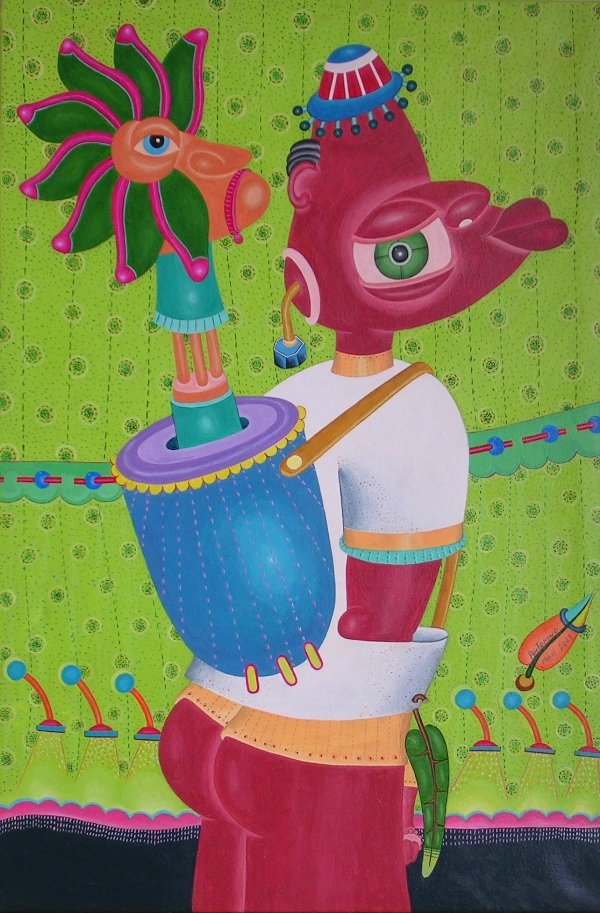
Model from Bahia Being Photographed
2003, 105 x 70 cm, Acrylic on canvas
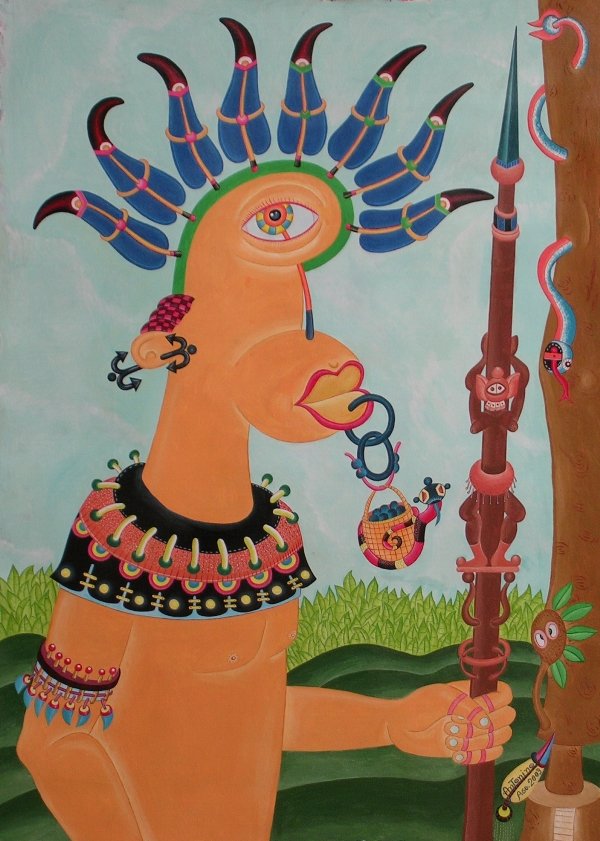
Simon, the Travelling Warrior
2003, 104 x 75 cm, Acrylic on canvas
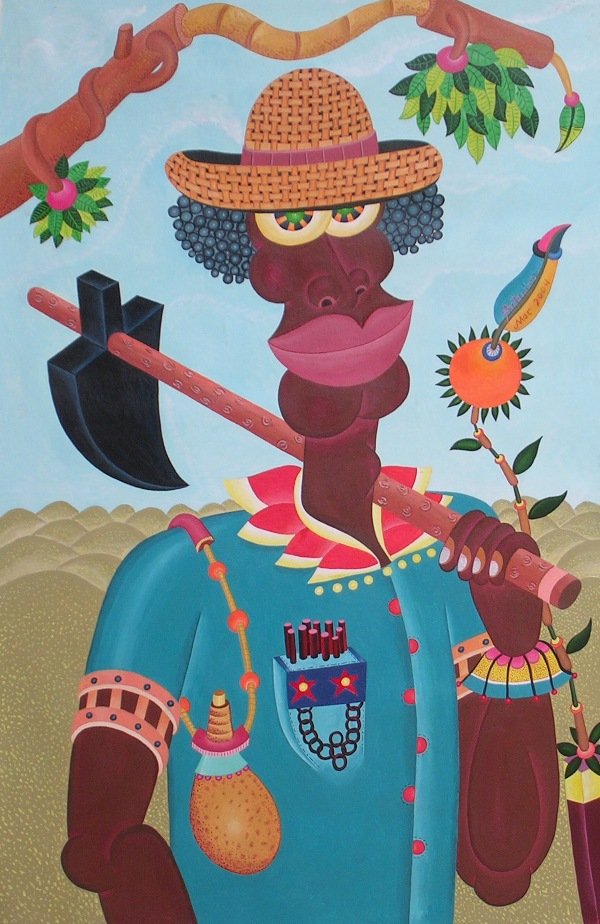
An Afro-Brazilian face
2003, , Acrylic on canvas
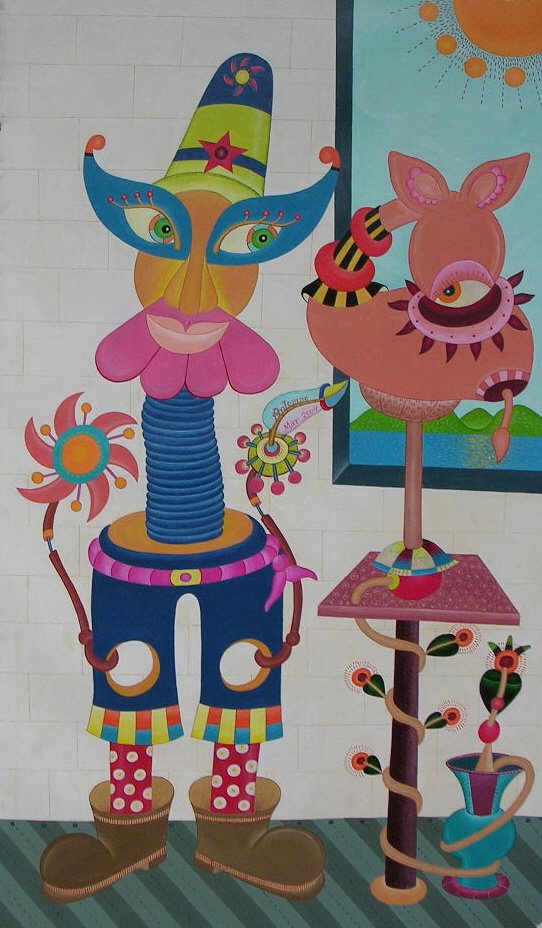
Carnaval Junky Leaving his Prestidigitating Pet Cat at Home
2004, 102 x 68 cm, Acrylic on canvas
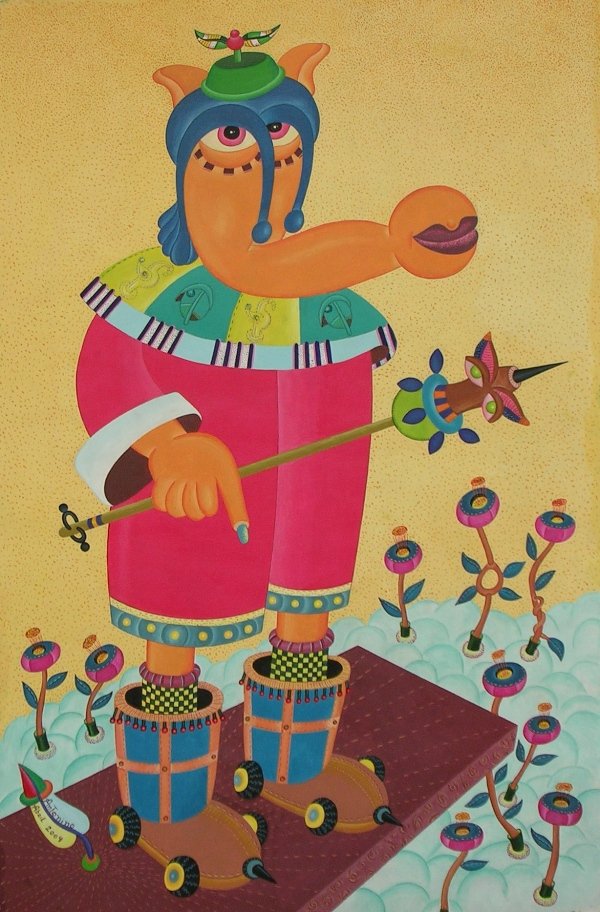
Boy
2004, 115 x 74 cm, Acrylic on canvas
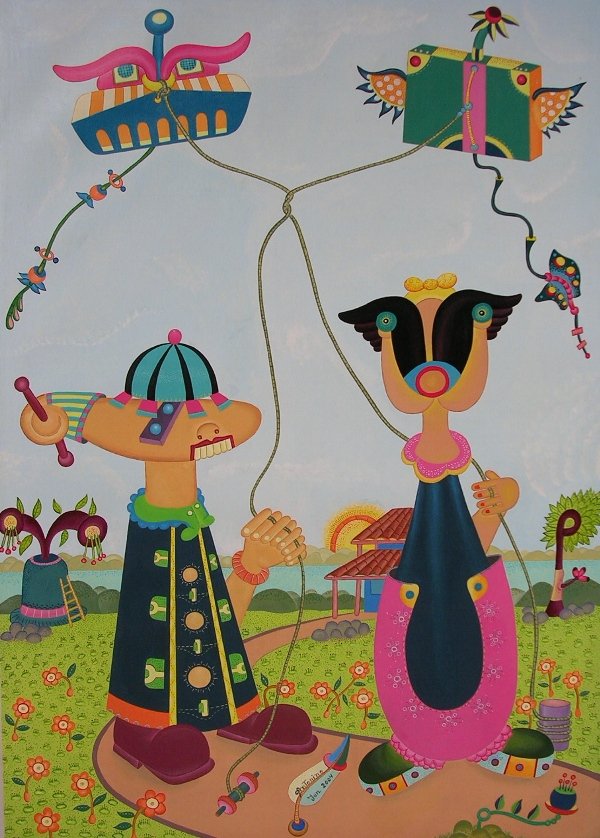
Children Playing
2004, 119 x 83 cm, Acrylic on canvas
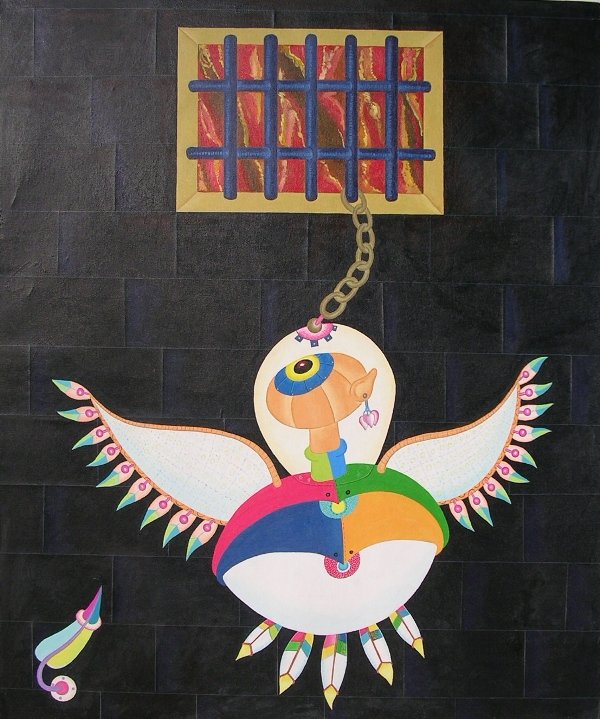
Dove
2004, 145 x 89 cm, Acrylic on canvas
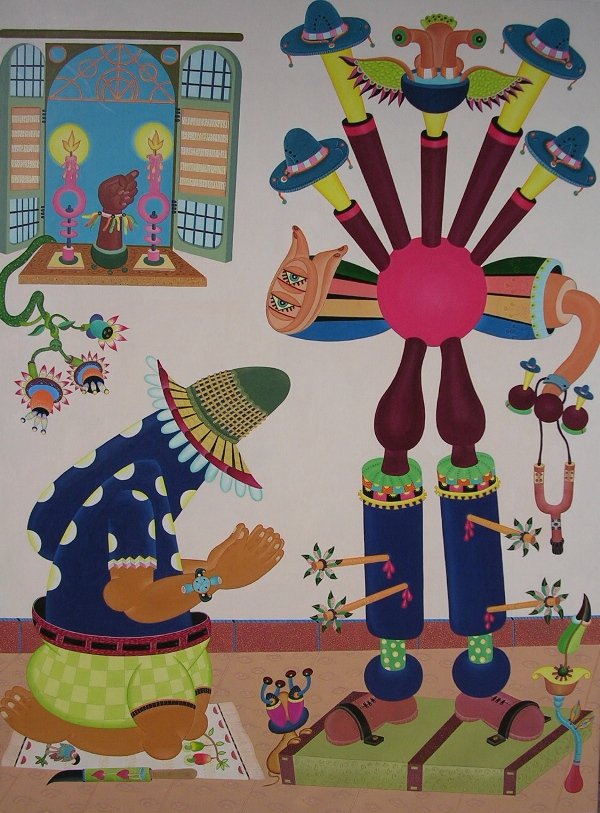
Religious Devotion
2004, 199 x 147 cm, Acrylic on canvas
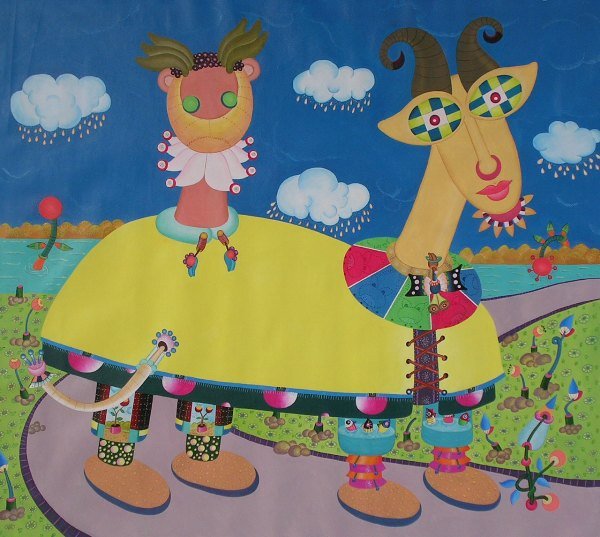
Bumba Meu Boi
2004, 108 x 119 cm, Acrylic on canvas
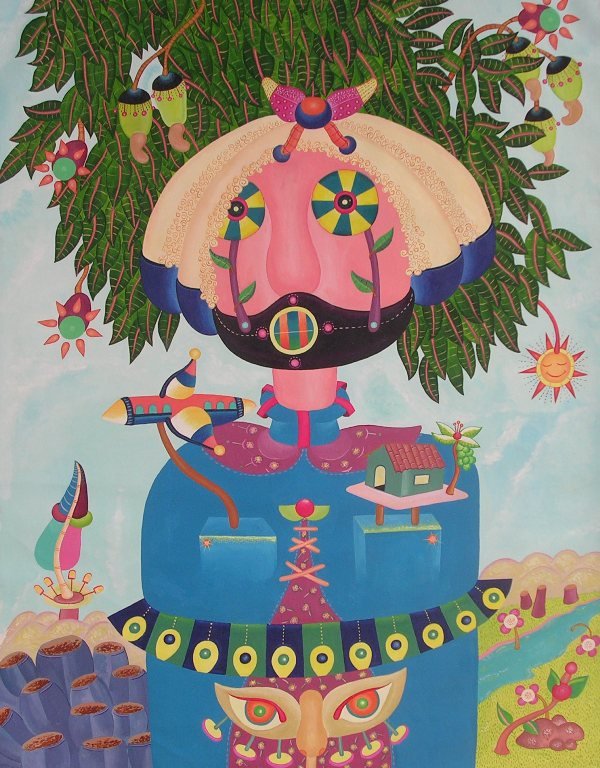
Poseidon (1)
2012, 130 x 80 cm, Acrylic on canvas
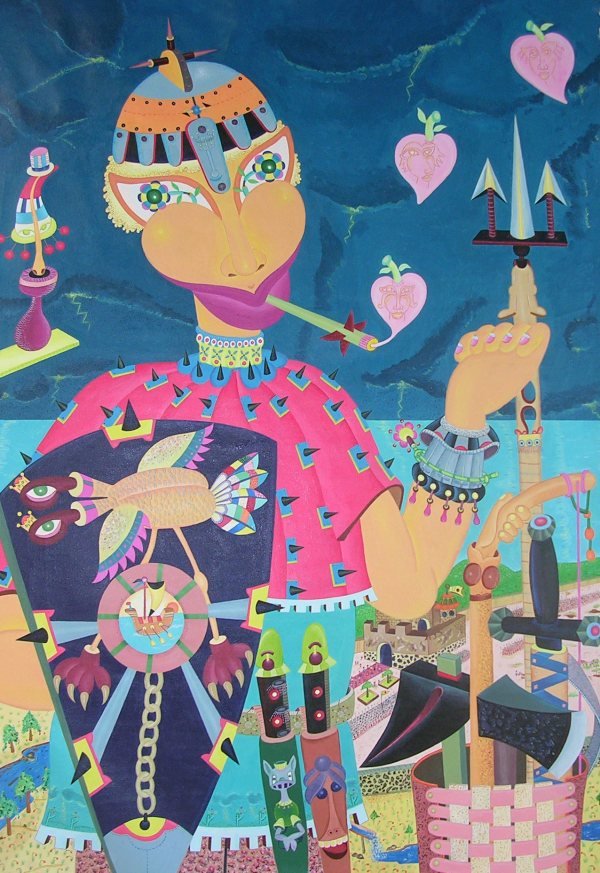
Boudicca the Warrior
Date TBC, ? x ? cm, Acrylic on canvas
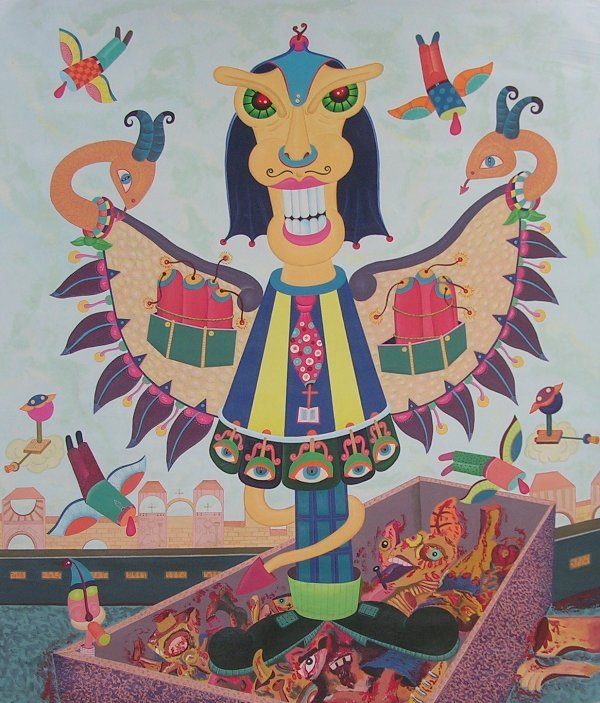
The Face of Terror, or The Human Bomb
Date TBC, ? x ? cm, Acrylic on canvas
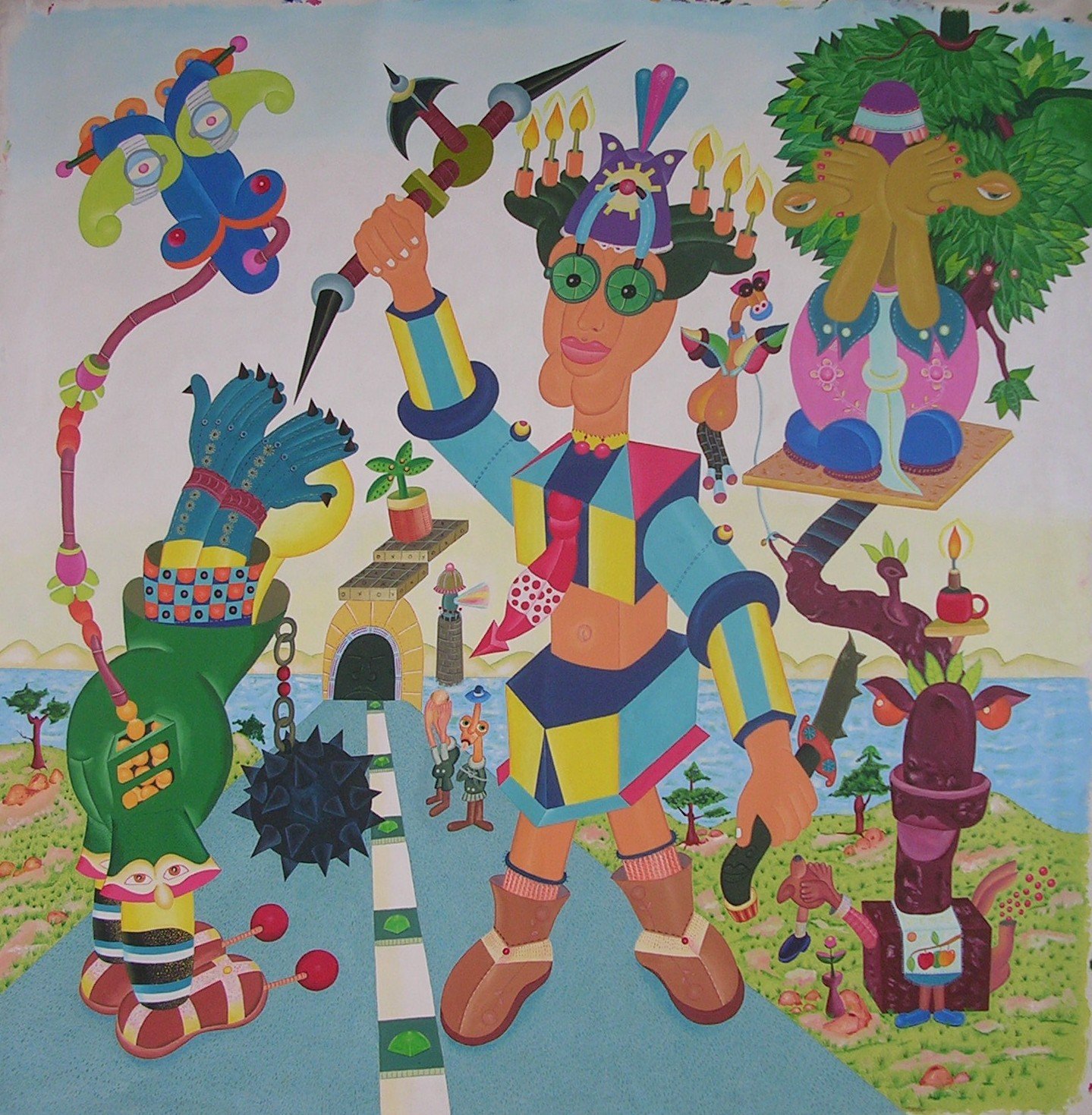
Man's Fight Against Mental Disorders
Date TBC, ? x ? cm, Acrylic on canvas
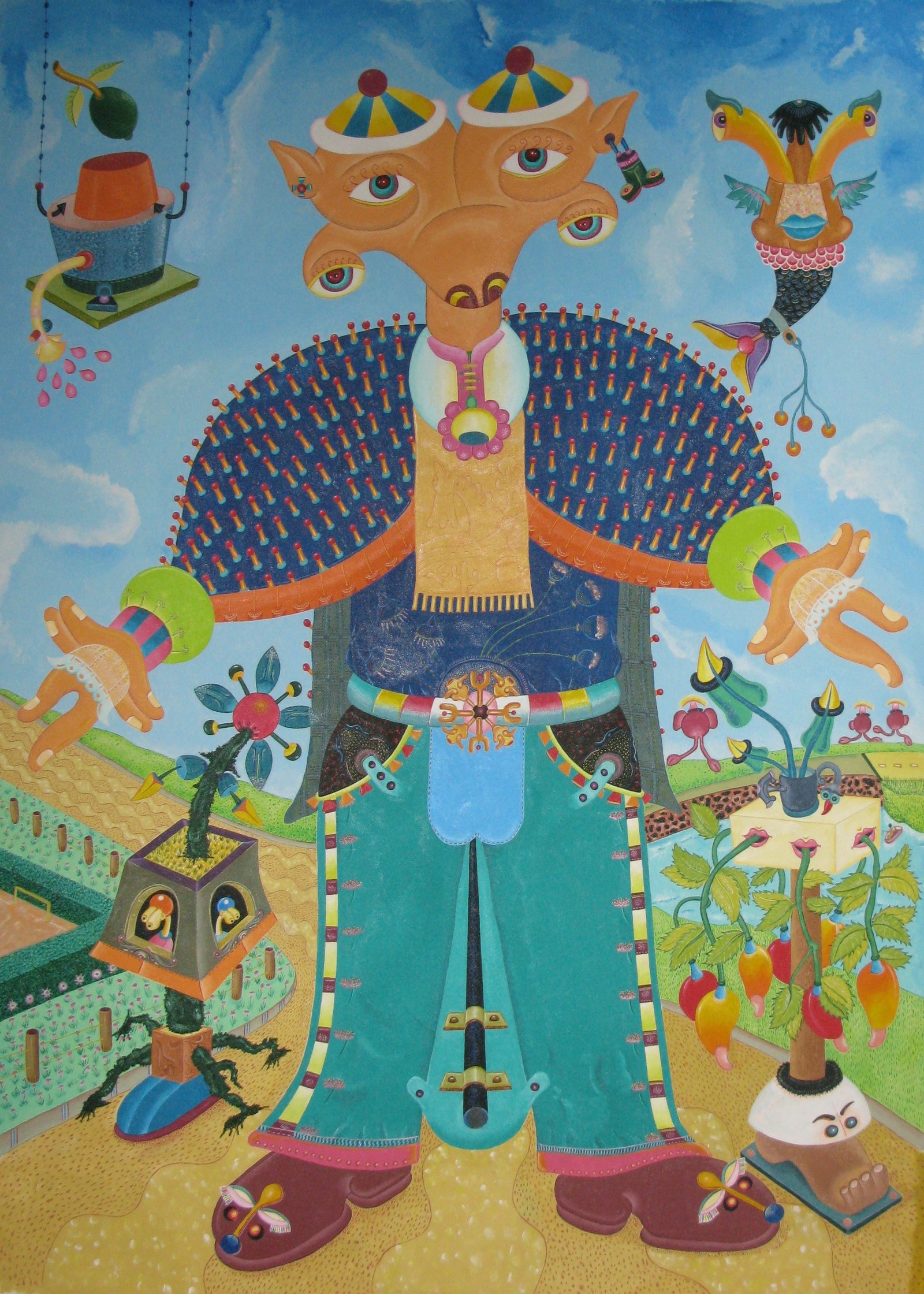
The Man with All-round Vision
Date TBC, ? x ? cm, Acrylic on canvas
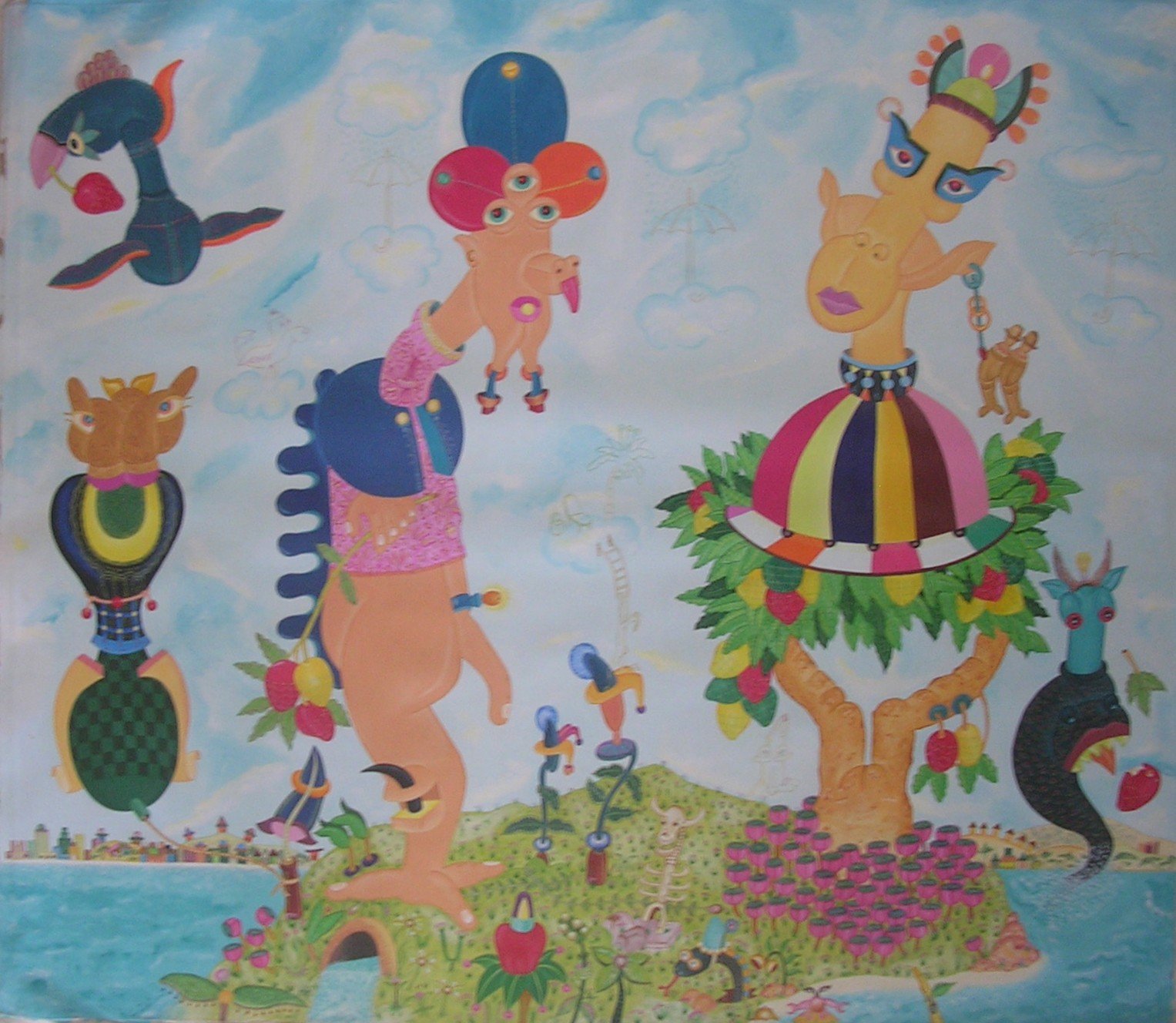
The Sacred Fruit of Itaparica Island, Salvador, Bahia
Date TBC, ? x ? cm, Acrylic on canvas
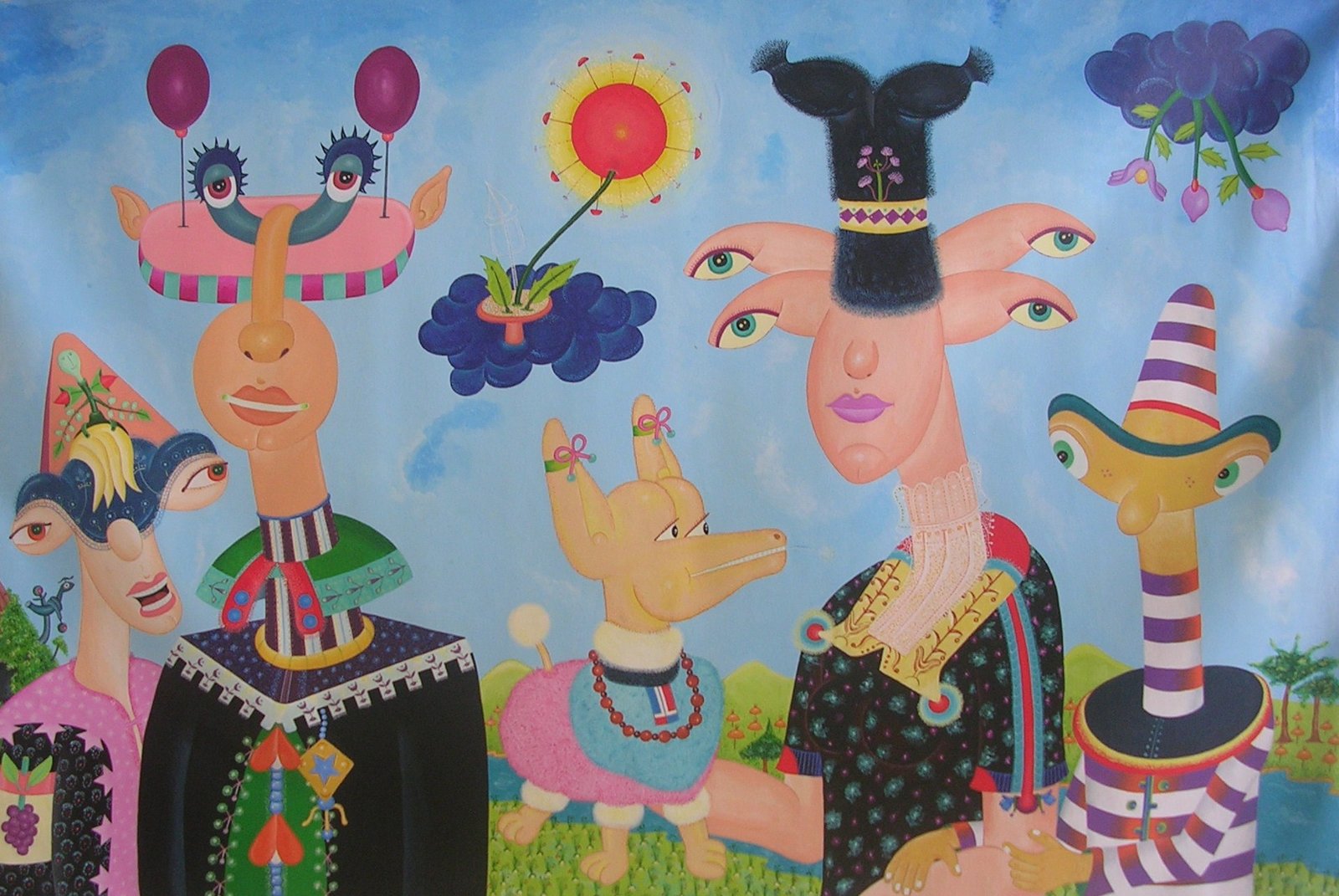
Portrait of a Faverolles-sur-Cher Family at the End of Summer
Date TBC, ? x ? cm, Acrylic on canvas
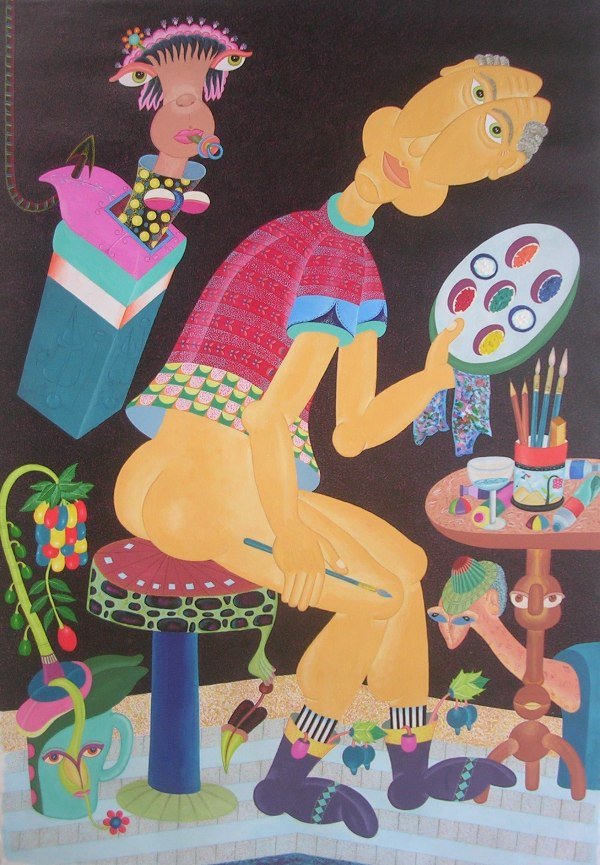
Self-portrait
Date TBC, ? x ? cm, Acrylic on canvas
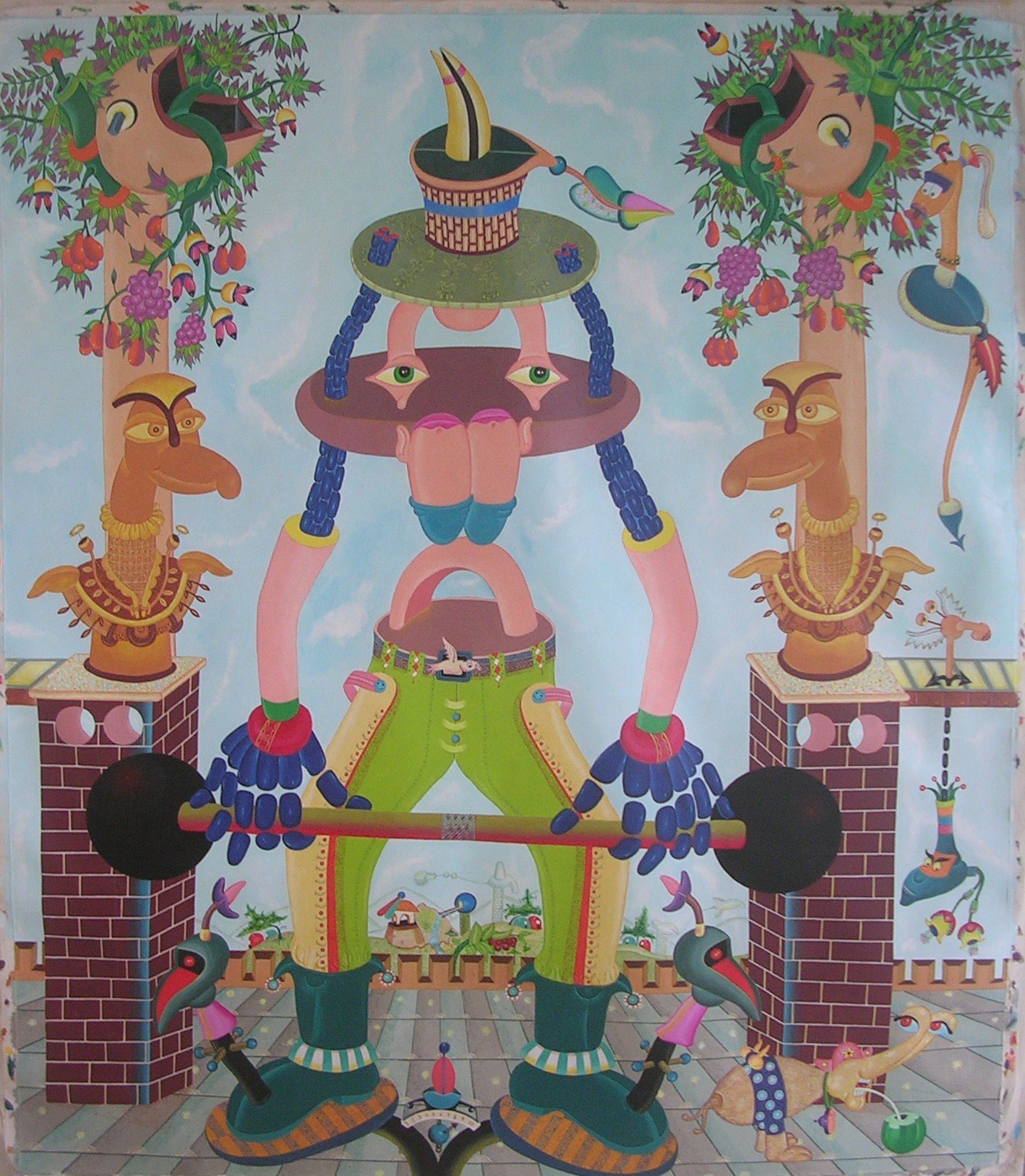
Weight-lifter
Date TBC, ? x ? cm, Acrylic on canvas
Kari (Kari)
“Reef, rocky islet, shelf, shoal” they say. Warning! This is going to be a long one, so probably best to skip... Judging by the various ‑kari placenames on coastlines across Estonia, islands and all, the word reeks of ambiguity. Let’s start with Tallinn proper. Estonia has about 3793 km of coastline, Tallinn’s share of which is about 70. The coastline stretches from Tiskre to Merivälja, along which are kilometers of boulders, some massive, others in groups, many in blockfields, and plenty sitting on their own, minding their own business, on land or in sea. Moving west to east: first, we have the Kakumäe poolsaar or peninsula, with Liivakari and Kivikari both of which look more like sandbanks than felsenmeers (but see Paljassaare, re the underlying tectonic plate rising at a rate of about 2.4 mm / year, or 24 cm / century, in which case the name could refer to a state 100 or more years ago); then little happens until we get to Kopli neem (cape or naze), where there’s an Allikari but it’s really not clear as to what it actually designates, followed by Väike and Suur Haak, two minor blobs protruding into the sea and where the best translation of haak (lit. hook) might be a “very obtuse-angled protusion seaward from a generally straightish beach” but corresponds very well to what, if we’re patient enough, we’ll soon see in Naissaar.
Further out to sea from Suur Haak there is what seems to be a felsenmeer: Suurehagi kari, then things quieten down again (other than the two Paljassaare forks, Suur Paljassaare poolsaar and Väike Paljassaare poolsaar (large and small Paljassaare peninsulae) between which lie Saarevahe Lõugas (lit. between-the-islands bight, where ‘island’ is surely metonymic and/or just plain lazy for ‘peninsula’, but then again they are peninsulas on a peninsula...) and Saarevahe Haak, another bump in the road... Moving down the Paljassaare peninsula to the shining city on a limestone bank, this is where it starts getting interesting, we find Pikakari and anyone looking at it cannot but have an Aha! moment. First of all, it’s relatively long (see Pikk), and secondly it looks as if someone added a few tons of riprap onto the pre-existing string of boulders for stability and poured cement all the way out to sea and called it Katariina kai or quay.
This is thus the first Tallinn inkling of one key property of a kari: an extension of the coastline into the sea, often next to or either side of a bay and whose shape ranges from this, a nigh-on parallel-sided spit to an almost imperceptible pimple of, at most, 160°. Next we find what looks like three shoals called Oiusaar (not clear, possibly ‘hole-in-the-ice’), Kõuesaar (thunder) and Ilosaar (beauty), the ‑saar ending indicates that they are islands. Yes, underwater islands. But next to a shipping lane or port that’s as good as... We can ignore the Central Tallinn coastline which, from a boulder nomenclature point of view, is extremely disappointing, and that’s it! We’ve done Tallinn. All that waffle for just five karis. Never mind, we carry on undaunted. Nearby locations will, I’m sure, provide the excitement we seek... On the other side of Pirita, on the west of Rohuneeme there are, in order, Rivikari (‘line’? kari, poss. a shoal), Lõunatkari (‘south’ kari with ‘t’, poss. typo) and Põhjakari (‘north’ kari, these 2 may be single erratics, felsenmeers or shoals), Mikumadal (short for Michael’s lowland? poss. a shoal and I include non-kari names when the geographical feature could, according to reason, be designated by kari), Porda kari (other than a computer port, the only word that starts with pord- is a dated term for prostitute, read into that what you will,
but this may well be a local adaptation of international sailor-speak, poss. a felsenmeer), Virukari (see Viru, poss. ditto, vaguely), Pihlakakari (see Pihlaka, with a Rohuneeme in front to differentiate it from the Pihlakakari 500 m NW on Kräsuli) and lastly, before I get to Russia, Kabelikari (chapel or cemetery) on the E of Rohuneeme which could be a point, shoal, felsenmeer or who knows what, and Kure kari, both of the moderate protuberance species. Before we leave the mainland for the unbecoconutted isles of the Baltic, we take a quick look at the Suurupi poolsaar, in Harku maakond (county) with its fair suburban names of Oktett, Konstruktor, and Kratt-3 and Kratt-4 (Kratt-1 was already taken by Haabersti, and Kratt on its own by Pirita, and is an interesting name in its own right: this vaguely golemesque creature was created by its owner out of wisps of hay, sauna whisks or random bits ’n bobs and brought to life by a contract with the devil and payment of 3 drops of blood [cheats used blackcurrant]; the creature’s main task was to nick things for the owner, grain, loose change, etc., zipping around on its own internal combustion system [but see November, film by Rainer Sarnet after book by Andrus Kivirähk], the trouble was, and there always is, that the Kratt had to keep on doing his master’s bidding or would start doing things against him, so it would be asked to do impossible tasks such as explain the Estonian saav kääne [translative case] to a duck and, inevitably failing, would burst into flames and self-destruct [see Komeedi], the same term is used as modern metaphor; essentially, if you have a problem, Kratt will resolve it and today’s Estonians define it as “an artificial intelligence system based on a software algorithm that is autonomous, learnable, and performs traditional human actions” [en.kratid.ee]; fine, but why not call it a pixelpixie?
This is the text for My Featured Article